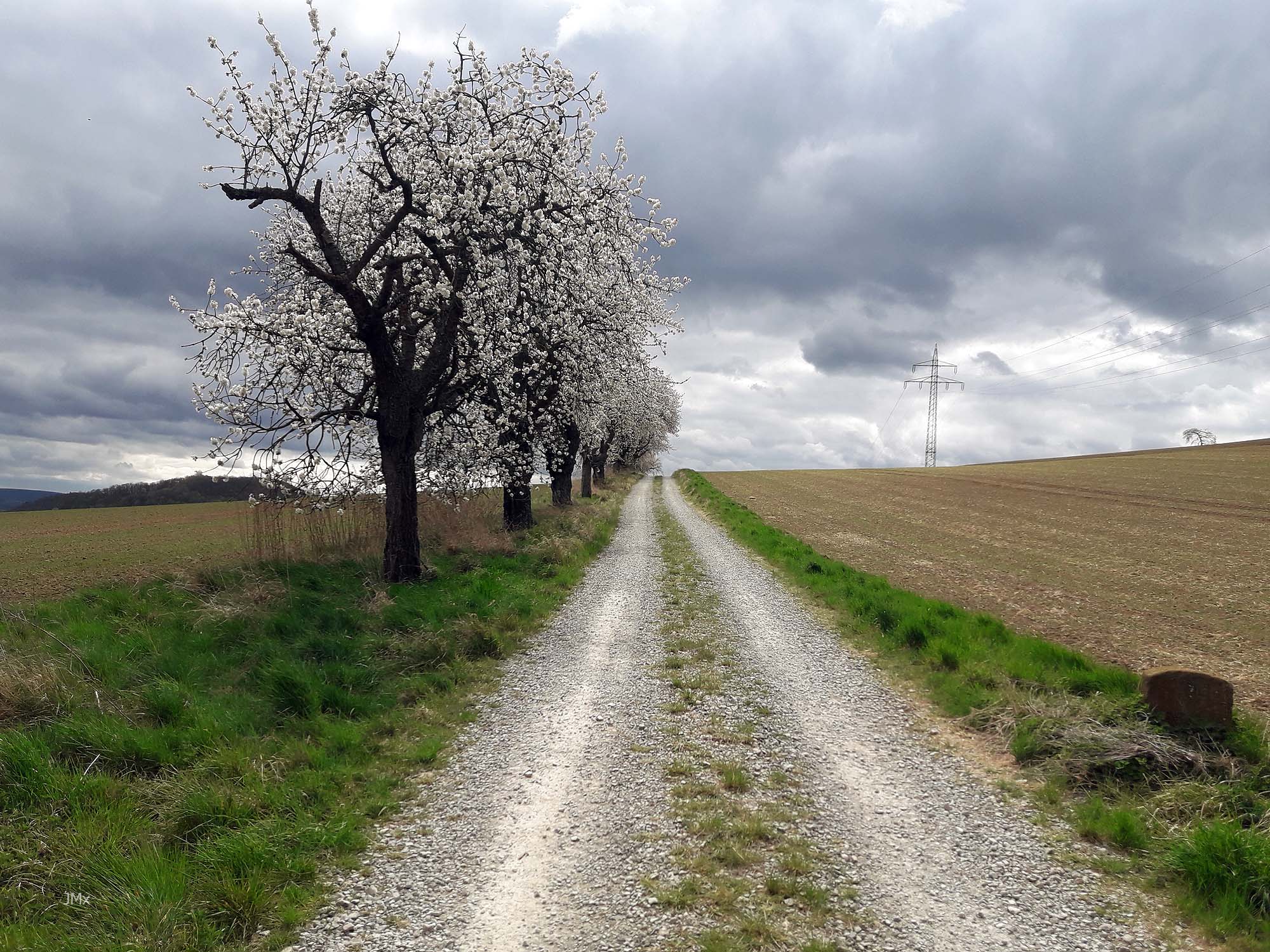
Route 72km – Route 60km – Route 54km – Route 40km – Asphalt Only – 4 Descents Omloop – Gö Cobbles – Gallery
Xtra Gravel: Het Volk – Gö North 48km – Nord-Sud 56km
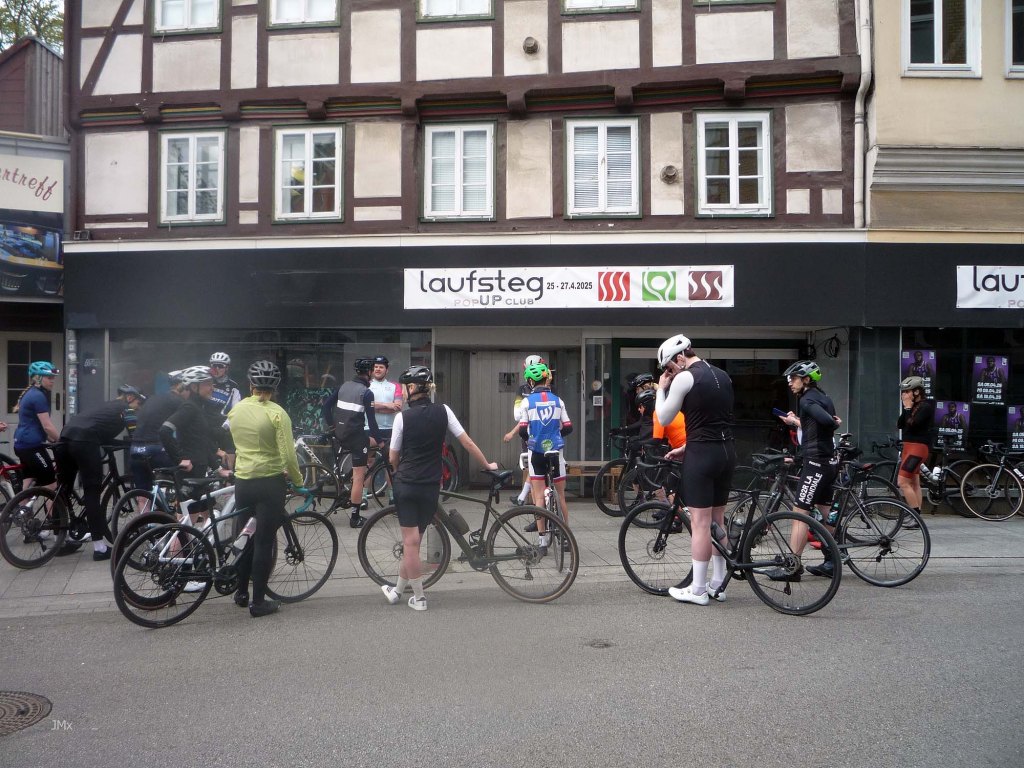
I scouted the Easter Monday Gö Gravel ride starting and finishing at the Allez Club House, Göttingen.
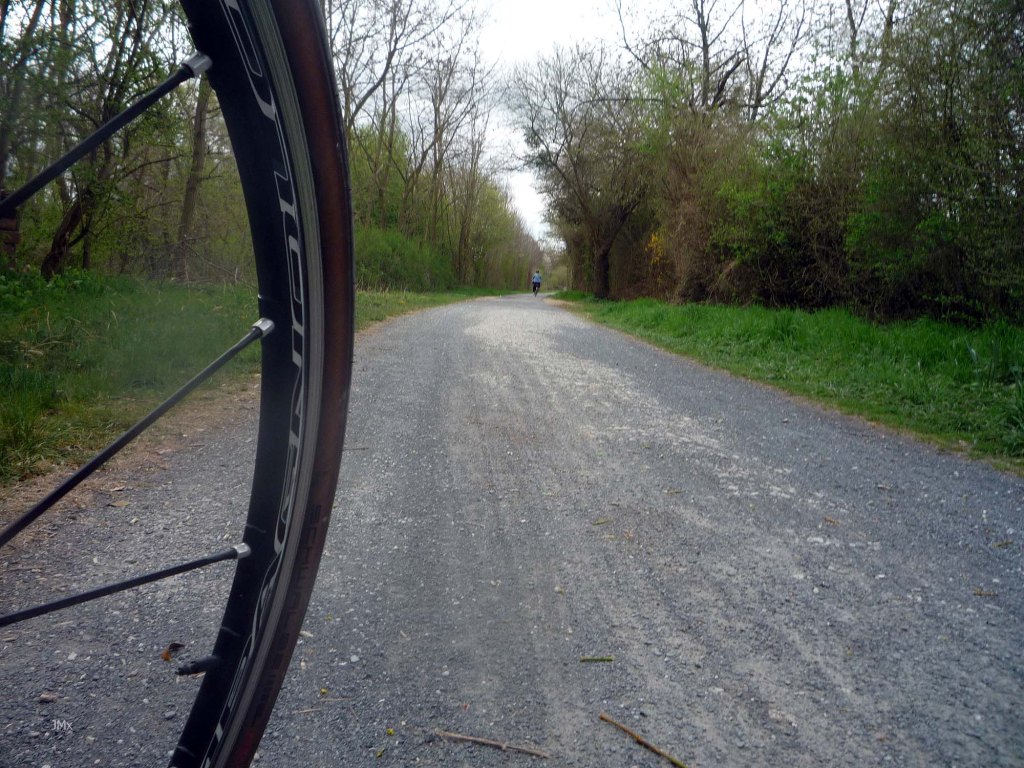
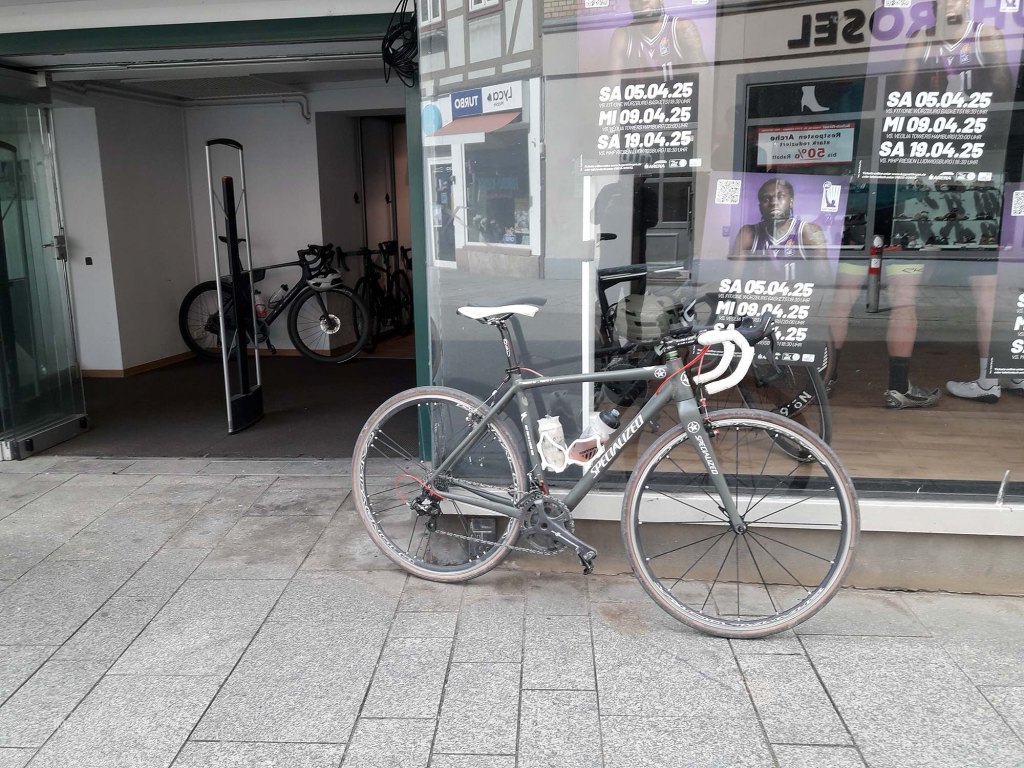
The route is based on the Het Volk version of the Omloop series. I rode my Omloop bike with skinny road slick tyres with care, no mishaps and I recalled my rides on the Paris Roubaix cobbles (see below).
OK, I lied no bike issues but when crossing through a ford of a river the surface was like ice, and I fell off falling back into the water. I watched my camera float away and chased after it paddling to keep up. I had a wet bottom, feet and retrieved my camera!
WE WILL BE CHANGING THE ROUTE TO AVOID THIS RIVER CROSSING.
The informal ride is a celebration of the Tour of Flanders, and the Paris Roubaix cycle races without as much hurt and the cobbles.
Strava event link: https://www.strava.com/clubs/581219/group_events/1983437
I caught up with the Tanline Crew pre-TDE ride and watched PRbx at the Allez Clubhouse afterward.
On Strava: https://www.strava.com/activities/14166136216


Paris Roubaix
I have ridden the Paris Roubaix sportive five times and lived to tell my tale.
In the days before we rode, we talked seriously about tyres, in particular pressures, width, and what level of sacrifice for speed was worth unbalancing the finite weight between finesse and force.

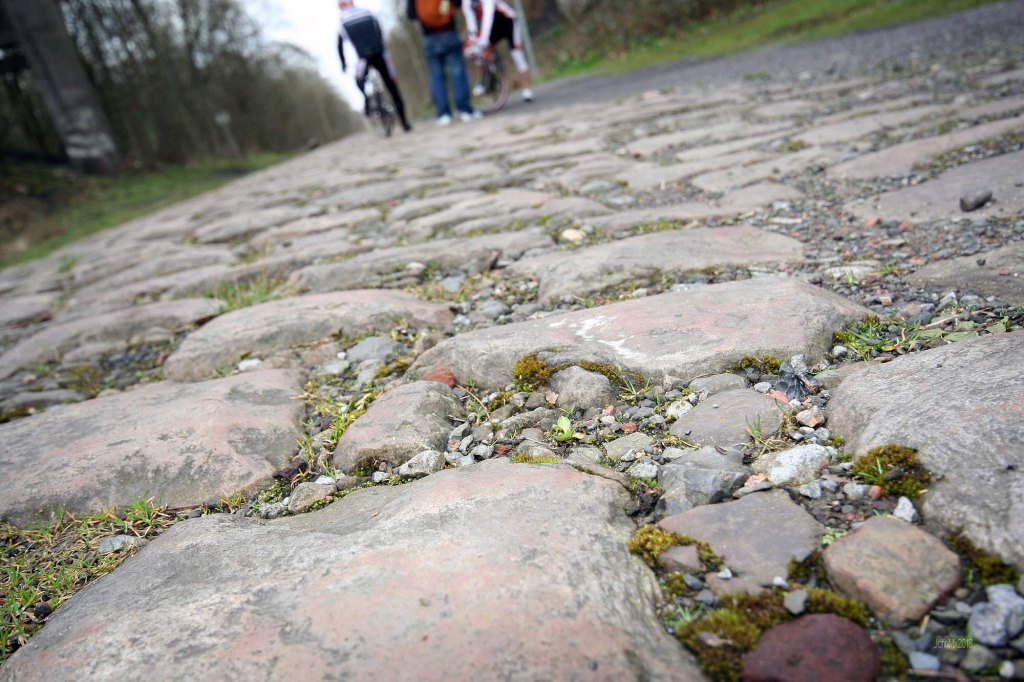
The stones are more than imagined, not inanimate, they can be hostile and mean. Not to be cajoled or threatened and you ride them with respect, style and subdue your cunning self-importance.
In the French capitol ´Paris Stone´ is characteristic of the romanticised cobbled streets constructed from Lutetian limestone and worn smooth by the passage of moonlight lovers.
In contrast in Northern France those cobbles saved from the spread of modernity and asphalt are predominantly Porphyry stone formed from fluid magma, quarried, made squarish with imprecise strikes and placed roughly by hand creating a jagged, uneven working surface keeping the traveller above the mire or out of the deep ruts, of an unpaved road.
This is the land of Emil Zola who wrote of the miners and mines which mark the area, where slag heaps are mountains and ghosts of the industrial age haunt, manifest in the coal dust blackened soil such as at the fearsome Arenberg Forest. Zola talks of the cobbles in his classic novel Germinal published in 1885 – “On a pitch black, starless night, a solitary man was trudging along the main road from Marchiennes to Montsou, ten kilometres of cobblestones running straight as a die across the bare plain between fields of beet.”
The Paris Roubaix race was weapon in a media war as many were in the 19th century, being organised by Le Velo newspaper before it was taken over by l´Auto supported by the likes of tyre manufactures Michelin and Clement. Incidentally, l´Auto had sided with the French government and anti-Alfred Dreyfus sentiment, Dreyfus an army officer the victim of a notorious injustice by an anti-Semitic conspiracy. Le Velo had supported the victimised man.
Little wonder that the race became known as the ‘Hell of the North’ for the parcours runs adjacent to some of the bloodiest entrenched battle lines of the First World War such as Arras, Amiens, Cambria, Vimy Ridge and the Somme.
For many Paris Roubaix is a throwback echoing races held in the pioneer days when the growth in the popularity of the bicycle went hand in hand with a world turned upside down by the industrial age, when society was gripped by social and economic change, and the historical roads remain at the heart of the race.
The first stretch of the contest from the start is smooth, here natural wear and tear of the asphalt such as potholes are to be avoided but otherwise it is a fast rush toward Troisvilles where the real test begins.
I shudder to think of the left turn off the main road and downward onto the cobbles approached at speed, now was the time of reckoning, the balance right or wrong, and if the percussion through your fingers a drum beat too much. Around you it feels like an army is in panicked retreat abandoning bidons, pumps, lights, bags, food from pockets – anything not firmly attached is ejected. Even then, there is tight and Paris Roubaix tight, a handlebar shifts, and a rider overreacts and falls into the dust accompanied by a sickening maelstrom of noise and dynamism, and you race past.
The conditions can be a double-edged sword, never take anything for granted and when dry the pace is quicker, the impacts come at you more quickly – painfully, and the hard packed mud allows you to ride in the stone free gutter between the field crops and the cobbles. The payback is hidden voids and sharp edges.
When sodden the pace falls, and you slip-slide in a primordial soup of muddy detritus and rain filled pools of indiscernible depth summon you to a dunking.
On the brow, it is a tight rope of a ride, here it is safer from the faltering riders who fear the Porphyry centre, and stay clear, the stone is more homogeneous although showing signs of engine sump strikes it is less disturbed by the wheels of motor driven vehicles where torque has displaced and made ruinous the pave.
Riding on the butcher’s knife edge is worth the fight and the emotional battle to keep your momentum fluid, going forward and to hold your line, this is the key to your survival. If you flounder, you become a shipwreck stuck upon the rocks like the many who sail past you on the asphalt as I have been many times by pelotons of body-perfect, and lookalike-pro-decorated riders, only for them to be fixed to the spot broken by the hammer blows felt through their hands. The fight is to stay on the edge of the knife without fear of a cut to the bone and to hold your own whilst others shout abuse to let them past and you wise to the possible fate force them to deviate and take their chances on the lower pave edge.
When the rains come the hunger for the thin centre above the flood line is greater, now it is a lottery to overtake and a step into the known awareness of the horrors that lurk there. You are increasingly ripe for a crash when a rider abandons hope and switches down spontaneously without warning into your path.
The rain instils fear in your mind as tyres slide on muddy slime and if biblical your senses become drowned or suffocated by a shroud of otherness requiring a self-inflicted punch to the face to pull me out of a fixed-stare trance.
The torture extends beyond the cobbles because the peaceful respite of the asphalt road must be won against unfavourable gods blowing a storm of wind in your face and then there is the seemingly endless niggle and strain on legs felt dearly upon long upward approaches at road bridges, normally traversed without thought.
And the delight, when you stop having triumphantly entered the Roubaix Velodrome and are spent and decline a second lap of the iconic track concrete. But before you fall to the ground you exchange a knowing smile of satisfaction with a friend or even foe.
The final pleasure is a cold shower in the utilitarian wash block, this a labyrinth of concrete basic amenity, here I and my friends both boys and girls talked over the neck high and open cubicles each dedicated to a race winner. And we like them reach up to expose a naked dirt encrusted arm to pull a dangling chain to regulate water flow with numb and blistered fingers
Links
My camera falls off in the Arenberg Forest – https://youtu.be/6ybyyl9JVgQ?si=pScEQ0v3UD6X20DX
A short summary of the day – https://www.youtube.com/watch?v=6ybyyl9JVgQ&t=18s
2010 Ride write up (Brutal)
2012 Ride write up
Betteshanger Cross
 Velo Klubhaus
Leave a comment